
Mike Steiner: Contemporary Art Visionary and Pioneer of Video Art in Berlin
04.12.2025 - 13:25:25Mike Steiner shaped contemporary art with groundbreaking experiments in video, painting, and performance. Explore his unique legacy in Berlin’s avant-garde and beyond.
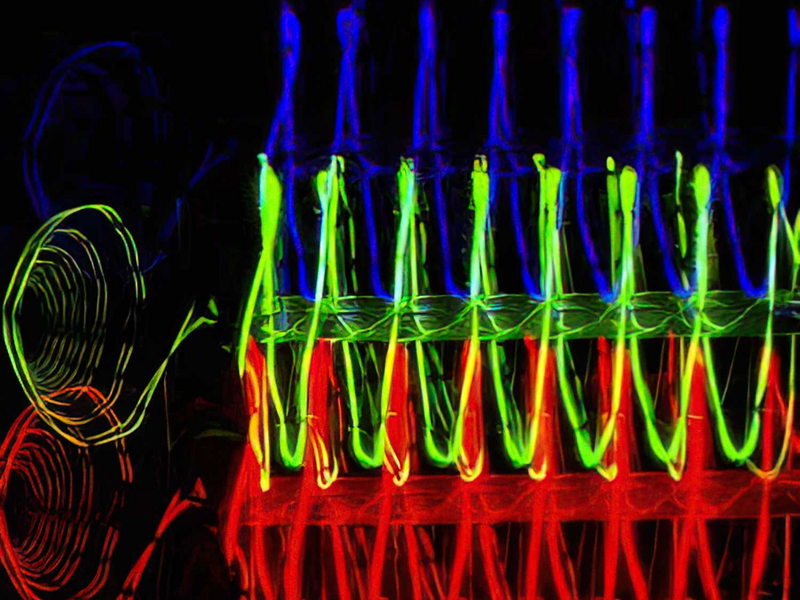
Mike Steiner is a name inseparable from contemporary art in Berlin—an artist, visionary, and catalyst whose work not only captured but actively shaped the vibrant energies of his time. What happens when an artist dissolves the boundaries between painting, video, and performance—a practice that seems to ask, at every turn: How far can the image be opened, and where does the living moment begin?
Discover contemporary art by Mike Steiner – See seminal works and media innovations now
From early exhibitions in Berlin’s turbulent postwar years, through his formative period in New York among the likes of Allan Kaprow and Lil Picard, Mike Steiner’s career reads as a living survey of contemporary arts in Berlin and beyond. Trained in painting at the State Academy of Fine Arts in Berlin, he first stunned the public at the Große Berliner Kunstausstellung in 1959—among the youngest ever admitted. But it was his restless curiosity and penchant for experiment that would, again and again, propel him to the forefront of new artistic territories.
While peers like Georg Baselitz or Joseph Beuys defined their stylistic signature within a single discipline, Steiner constantly sought new forms. He immersed himself in informel painting, then shifted into performance and video, always guided by the sense that art must be lived, not merely seen. The legendary Hotel Steiner, opened in the early 1970s and often likened to New York’s Chelsea Hotel, became Berlin’s beating avant-garde heart: a meeting point for Fluxus, representing artists as diverse as Marina Abramovi? and Ben Vautier, and a crucible for performing arts and installation practices in West Berlin.
Steiner’s most radical move was perhaps founding the Studiogalerie in 1974, a unique space for video art, performance, and open experimentation. At a time when video was still a marginal and expensive medium, he provided artists with cameras, editing tables, and a platform to show their work. Comparable to Nam June Paik or Bill Viola, Steiner did not just contribute to the discourse—he built the very infrastructure that would allow video art to become a true artistic force. The Studiogalerie hosted legendary actions (such as Ulay’s infamous intervention at the Neue Nationalgalerie) and gave space to the feminist avant-garde, including pioneers like Valie Export and Carolee Schneemann.
What sets Steiner apart among Berlin artists is neither a single masterpiece nor a signature style, but his courage to champion the transient, the ephemeral, and the experimental. His own video works—often created in close collaboration with leading figures of the time—served both as artworks in themselves and as documents of fleeting performances. The celebrated Painted Tapes series, for example, represents a synthetic approach: video frames treated painterly, creating a poetic fusion of color, rhythm, and electronic media—recalling the gestural abstraction of Robert Motherwell or the chromatic energy of Gerhard Richter, yet always with a unique, experimental spirit.
This tireless networking and archival impulse culminated in a video art collection of singular breadth, featuring early works from artists like Ulay, Abramovi?, Gary Hill, and Richard Serra. In 1999, Steiner’s legacy was recognized in the grand solo exhibition "Color Works" at the Hamburger Bahnhof – Nationalgalerie der Gegenwart—a milestone not just for the artist, but for the entire ecosystem of contemporary arts in Berlin. Here, his dual position—as creative actor and chronicler—was shown in full relief, underlining his influence on both performing arts and the institutionalization of video art in Germany.
The 1980s and 1990s saw Steiner move naturally between media: from Super-8 films and abstract paintings to installation and copy art, always balancing technical innovation with a keen eye for social context. His TV format "Die Videogalerie" (1985-1990), broadcast via Berlin's cable pilot project, was a pioneering attempt to bring the language of video art into the living rooms of a mass audience, echoing the ambitions of Gerry Schum’s earlier Fernsehgalerie. Today, much of the historic Berlin Video Collection he assembled is stored at the Hamburger Bahnhof—awaiting digitization and broader public access, a treasure trove for researchers and art lovers alike.
Mike Steiner’s artistic biography is also a story of relentless curiosity. Born in East Prussia in 1941, he grew up in West Berlin, studied with Hans Kuhn, and was influenced by Pop Art early on. Encounters with the American avant-garde in New York, through Lil Picard, Al Hansen, and Kaprow, shaped his understanding of art as an expanded field—one always open to collaborative processes, accidents, and interventions. This openness is palpable in his later years, as he returned to painting (often in vibrant abstraction), continued to travel and photograph, and—despite health setbacks—remained active in his Berlin atelier until his death in 2012.
Within the landscape of international contemporary art, Steiner’s name stands alongside other great experimenters like Bruce Nauman, Dan Graham, or Yoko Ono—artists whose practice cuts across genre and medium. Yet it is perhaps Mike Steiner’s very Berlin-ness, his rootedness in both the city’s bohemian underground and its major institutions, that ultimately defines his position. In a time when contemporary art was questioning its own limits, Steiner provided places—physical, social, and archival—where new forms could emerge.
Today, a look at Mike Steiner’s oeuvre is a lesson in artistic versatility and social foresight. From abstract paintings to epoch-making video installations, from documentation of iconic performances to his own experimental films, Steiner saw art as a living dialogue. It is this continuing resonance—his sense that contemporary art must be open to the world and to its own reinvention—that ensures his legacy is not just preserved, but felt.
For a deeper dive into Mike Steiner’s extraordinary journey, and to view a curated selection of his work across media, the official artist website offers extensive information, exhibition history, and unique archival material.
Engaging with Mike Steiner’s art means encountering Berlin’s history, the global avant-garde, and the experimental spirit at the heart of all contemporary art. Those who wish to truly understand the pulse of artistic innovation—both then and now—should explore his works and revisit the legacy he so generously built for future generations.


