
Mike Steiner and the Evolution of Contemporary Art: From Painting to Media Revolution
01.01.2026 - 08:28:05Mike Steiner shaped contemporary art in Berlin with pioneering videokunst, powerful abstract paintings and the Studiogalerie. His oeuvre stands as a testament to the avant-garde spirit.
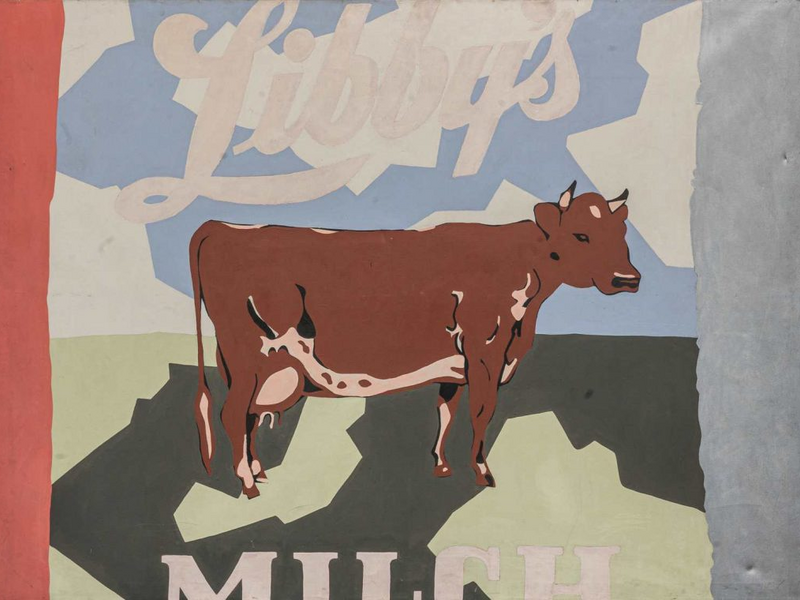
Encountering the work of Mike Steiner is like crossing a threshold: suddenly, boundaries between image and action, canvas and screen, object and occurrence dissolve—leaving the viewer in a vivid field of possibility. What, you might ask, transforms contemporary art into a living experiment? Mike Steiner’s restless search for form, media, and meaning provides some of the most striking answers seen in postwar Germany.
Discover contemporary masterpieces by Mike Steiner online now
From the outset of his career, Mike Steiner meditated on the dynamic relationship between art, artist, and audience. Rooted in Berlin’s smoldering bohemian scene, early paintings by Steiner emerged amid the late 1950s with exhibitions at the Große Berliner Kunstausstellung (GBK). Even as a teenager, he interrogated the traditional limits of painting—a spirit that would culminate in his eventual, celebrated break from the static canvas. This openness to innovation places his beginnings in dialogue with iconoclasts such as Joseph Beuys and Allan Kaprow, two figures Steiner would later host and collaborate with at his 'Hotel Steiner' and Studiogalerie, redefining Contemporary Arts Berlin.
Steiner’s return from New York in the mid-1960s marked a radical juncture: infused by Pop Art and the ferment of Fluxus, his Berlin studio became an incubator for new visual languages. Encounters with Lil Picard, Al Hansen, and proximity to Allan Kaprow charged his work with a transatlantic energy—mirroring, in other ways, the media investigations of Nam June Paik and Bill Viola. The 1970s saw Steiner’s artistic identity undergo seismic shifts. His legendary Studiogalerie, founded in 1974, was a catalytic melting pot for artists like Marina Abramovi?, VALIE EXPORT and Ulay. It was here that the lines separating art and life, performance and documentation, action and memory grew productively porous.
At the very heart of Steiner’s achievement stands his role as a vanguard of video art. Whereas Cologne leaned on institutional support under Wulf Herzogenrath, Berlin’s scene owed much of its vitality to the technical generosity and editorial vision of Mike Steiner. The Studiogalerie facilitated not only avant-garde performance but also the production and public screening of cutting-edge video works, paralleling the broadcast experiments of Gerry Schum. Steiner’s own camera became both participant and witness: with projects like the infamous 'Irritation – Da ist eine kriminelle Berührung in der Kunst' (1976, with Ulay), he captured acts rife with risk, humor, and sociopolitical subtext.
Far beyond the role of simple documentarian, Steiner forged a unique dialogue between moving image and painterly sensibility. The ‘Painted Tapes’ series, begun in the 1980s, represents a singular synthesis in contemporary art—a marriage of electronic signal and brushstroke that hovers between abstraction, music, and video. Works such as “Mojave Plan” (inspired by his journey with Tangerine Dream) or media collages like “Penumbras 3,” reflect an artist untethered by medium, always seeking the pulse of the cultural now. Kenner have compared these tapes favorably to Paik’s meditations on time and Viola’s poetics of perception, underlining Steiner's capacity to shape media into sensuous, contemplative experiences.
Yet, Steiner’s artistry was never solitary. He was one of Berlin’s genuine networkers and catalysts, mentoring younger artists, opening his collection, and fostering creative cross-pollination. Whether presenting Joseph Beuys, collaborating with Marina Abramovi?, or documenting feminist performance art, his influence reverberated across the international scene. Performances and installations—like the 'Hotel Room Event' with Ben Vautier—blurred domestic and artistic spaces, fostering an enduring avant-garde spirit in the capital.
Steiner’s own evolution zigzagged through media: Super-8 film, photography, copy art, and expansive installations—each new medium absorbed, tested, sometimes doubted, then transcended. His 'legitimacy crisis' regarding painting, as revealed during his time in New York and Florence, marks him as a thinker both skeptical and enthusiastic, engaging the same existential queries as peers like Bruce Nauman or Richard Serra, both iconic within the Hamburger Bahnhof and international blue-chip institutions.
A milestone was Steiner’s massive solo exhibition 'COLOR WORKS' (1999) at Hamburger Bahnhof – Nationalgalerie der Gegenwart. This show declared his gattungsübergreifendes (cross-genre) art and distinct approach to color—oscillating between abstract paintings and media installations—as a touchstone for a new generation of artists. The breadth of his oeuvre, from the ferocious energy of early paintings through the delicacy of textile works in his final years, underscores an imagination that refused stasis or pigeonholing. Consequently, Steiner’s works appear in lineage with figures such as Gerhard Richter (in painterly experimentation) and the relentless media curiosity of Bruce Nauman or Pipilotti Rist.
Alongside his art practice, Steiner’s function as a collector and documentarian cannot be overstated. His vast collection of video works, donated to the Stiftung Preußischer Kulturbesitz in 1999, now forms a cornerstone of the Hamburger Bahnhof’s holdings. This archive offers rare insight into European video, performance, and electronic arts, preserving ephemeral acts for future audiences and scholars—making him at once an originator and an invaluable caretaker of emerging media.
But what remains, ultimately, of Mike Steiner in the ever-renewing ecosystem of contemporary art? His technical innovation—spanning from brush to Betacam, from event to archive—reflects a uniquely Berlin attitude: open, restless, forward-thrusting yet historically aware. He challenges us to recognize art as an experiment perpetually in the making, an ongoing negotiation between presence and process. Revisiting his work in the present digital era, Steiner’s restless search for hybrid forms appears remarkably prescient, perhaps even prophetic.
For deep dives into Mike Steiner’s works, exhibitions, and critical essays, the official website Experience Mike Steiner’s full archive and legacy on his official artist website offers a treasure trove of images, texts and archival materials that invite fresh discovery.
In an art world that is ever more compartmentalized and market-driven, Mike Steiner’s attitude—unorthodox, bridging the painterly and the performative, the transient and the tangible—remains a beacon for those who understand contemporary art not as a product, but as a living encounter. His legacy in Contemporary Arts Berlin and worldwide persists as a challenge and an inspiration—to look, to record, and, above all, to reinvent.


