
Mike Steiner and Contemporary Art: Pioneer of Video, Painting, and Avant-garde Encounters
26.12.2025 - 08:28:01Dive into the vivid world of Mike Steiner—an icon of contemporary art whose influence shaped the landscape from Berlin’s Hamburger Bahnhof to the international stage.
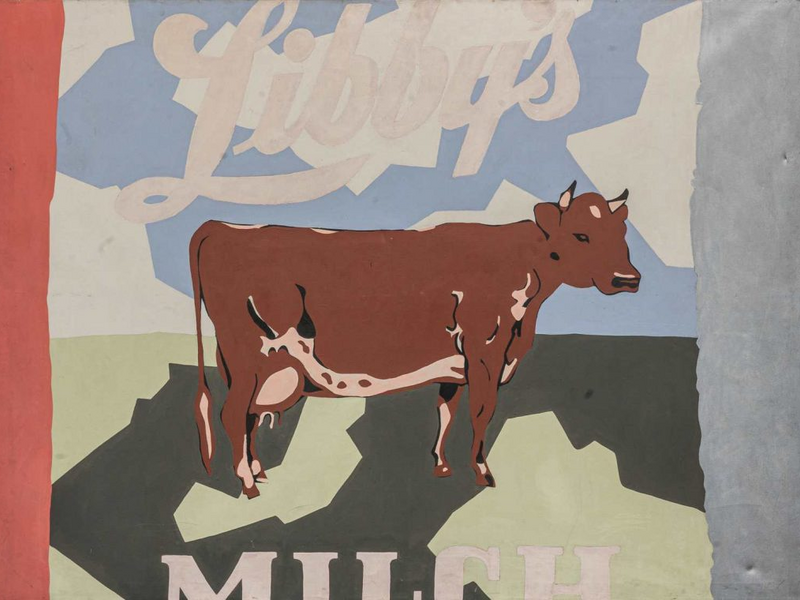
To grasp the roots and rhythms of contemporary art in Berlin, one must explore the pulsating oeuvre of Mike Steiner. From the moment his name surfaces, a current of creative tension threads its way through the story of German vanguard art—a tale marked by audacious experiment and the relentless crossing of boundaries. Can one pinpoint the very moment when painting dissolves into moving image, or when performance blooms into archive? With Mike Steiner, this line is never static.
Discover outstanding contemporary art by Mike Steiner now in this curated online showroom
Renowned as a painter, video artist, radical gallerist, and one of Germany’s earliest champions of Fluxus and performance, Mike Steiner’s impact traverses genres and generations. The scope of his vision crystallized most notably with his celebrated 1999 solo show "Mike Steiner – Color Works" at the Hamburger Bahnhof – Nationalgalerie der Gegenwart. This landmark exhibition underscored what aficionados of Contemporary Arts Berlin have long known: Steiner is more than an artist; he is an institution in perpetual motion.
Early in his journey, Steiner’s brush was the instrument of a restless intent. His participation in the Große Berliner Kunstausstellung as a teenager, and further schooling under the likes of Hans Jaenisch and Hans Kuhn at the Hochschule für bildende Künste Berlin, highlight formative years marked by traditional technique and expressive abstraction. Later, his frequent exhibitions—shoulder to shoulder with figures such as Georg Baselitz—revealed his early fluency in painting while suggesting a growing desire to subvert artistic norms. The 1960s found Steiner navigating the currents of Pop Art and Informalism, setting roots that would later nourish much bolder experimentation.
Yet for those who imagine Mike Steiner’s legacy begins and ends with paint on canvas, a shock awaits. In the revolutionary air of 1970s Berlin, he opened Hotel Steiner and the Studiogalerie—spaces likened to New York’s Chelsea Hotel for their role as havens for the international avant-garde. Here, not only did artists such as Joseph Beuys, Valie Export, Marina Abramovi?, and Allan Kaprow find fertile ground for collaboration and encounter, but Steiner’s own artistic trajectory tilted ever more radically towards the performative and the ephemeral.
His crucial exposure to American experimental film and subsequent encounters in the beating heart of New York's art world—via contacts like Lil Picard, Al Hansen, and the legendary Robert Motherwell—sharpened Steiner’s appetite for the uninhibited possibilities of multimedia. Travelling between Berlin and New York, he soaked in the ferment of Fluxus and the Happening movement, integrating these energies into his own distinct language. Unlike contemporaries such as Nam June Paik or Bill Viola, who each pioneered their signature strands of video art, Steiner evolved into a unique mediator and bridge-builder, merging painted gesture, moving image, and performative intervention.
The birth of Steiner’s Studiogalerie in 1974 marked a milestone: conceived as a self-help artist project modeled on Florence’s Studio Art/Tapes/22, it quickly established itself as a crucible for new forms. What set Steiner apart was a rare combination—he was simultaneously artist, producer, documentarist, and collector. By making expensive video equipment accessible, he invited a rising generation of artists to experiment and exhibit, anchoring Berlin as a future hotspot for contemporary media art.
Created during this prolific period, key works such as his video collaborations with Al Hansen, Ulay, and the epochal documentation of performances like Marina Abramovi?’s "Freeing the Body" (1976) and Ulay’s spectacular "Irritation: Da ist eine kriminelle Berührung in der Kunst" (1976) became legendary. These performative interventions—part protest, part conceptual gesture—placed Steiner at the vanguard of the intersection between visual art and living action. His films, which captured otherwise fleeting moments, have come to stand as vital documents in the lineage of European performance art.
But Mike Steiner’s vision did not stop at the threshold of the gallery or the confines of the video tape. With the television series "Die Videogalerie" (1985–1990), produced for Berlin’s Kabel-Pilot-Projekt, Steiner introduced contemporary video art to an entire generation. Over 120 broadcasts later, from artist interviews to event reportage, he had transformed the landscape much in the way visionary pioneers like Gerry Schum once did with Germany’s first TV gallery.
Notably, Steiner was never content merely to look back. The 1980s and 1990s were colored by increasing genre fluidity: super-8 films, photography, "Painted Tapes"—hybrid works fusing video and canvas—followed, demonstrating a restless urge to question the very nature of image-making. His 1991 project "Das Testbild als Readymade" and music videos such as "Mojave Plan" (1993), which won critical acclaim in Toronto, show the extension of painting by electronic means—a conversation between pigment and pixel, reminiscent of the very best in multimedia explorations.
Resonances can be drawn not only to German giants like Georg Baselitz, Joseph Beuys or Karl Horst Hödicke, but also to the likes of Pipilotti Rist and Vito Acconci, whose multimedia inventions similarly blurred disciplinary lines. Yet, where Acconci dissected space and body, Steiner built bridges between art forms, audiences, and technologies.
The scope and reach of Steiner’s innovation are perhaps crystallized in his formidable video art collection. From the 1970s onward, he gathered tapes—often the very first of their kind—by game-changing artists such as Richard Serra, Bill Viola, Gary Hill, and George Maciunas. His gift of this collection to the Stiftung Preußischer Kulturbesitz in 1999, now housed at the Hamburger Bahnhof, remains a touchstone for research and curation in the field.
Yet Mike Steiner was ever the painter, returning in his later years to abstract works characterized by vibrant color fields and gestural nuance. The painterly discipline and the electronic experiment fed off each other, establishing a body of work that feels both historically rooted and freshly urgent. In his last decade, with his health increasingly challenged, Steiner focused quietly on his Berlin studio—producing striking abstract paintings and, characteristically, textile pieces that expanded the idiom once more.
What, then, does it mean to encounter Mike Steiner’s work today? At a time when the boundaries between disciplines, media, and global art geographies dissolve faster than ever, Steiner’s life and production offer a beacon: a call to cross borders, to archive the ephemeral, and to treat all contemporary arts as sites of ongoing experiment and dialogue. His position, alongside the most influential artists and institutions—and his recognition in masterpieces exhibited at the Hamburger Bahnhof—is testament to his enduring legacy.
For anyone seeking deeper immersion, vivid documentation, or simply inspiration, the official website at Mike Steiner Official Website — Explore artworks, texts, and exhibitions here remains the definitive gateway. To browse his paintings, installations, and video pieces is not merely to witness history—but to engage with the living, breathing engine of contemporary art.


